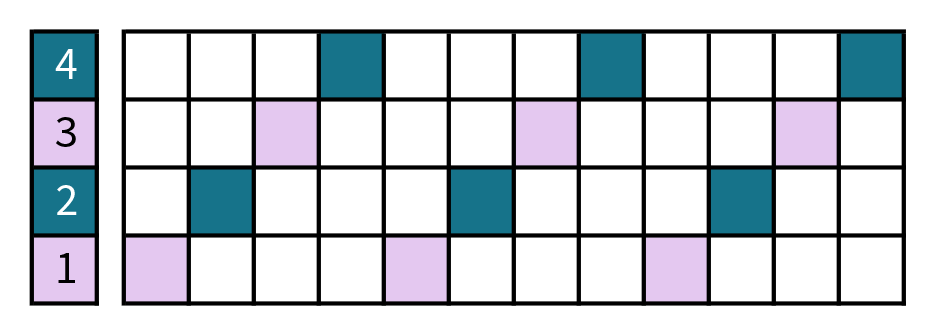
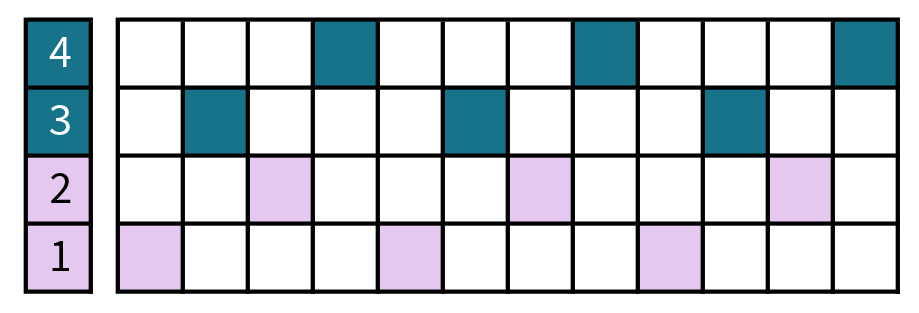
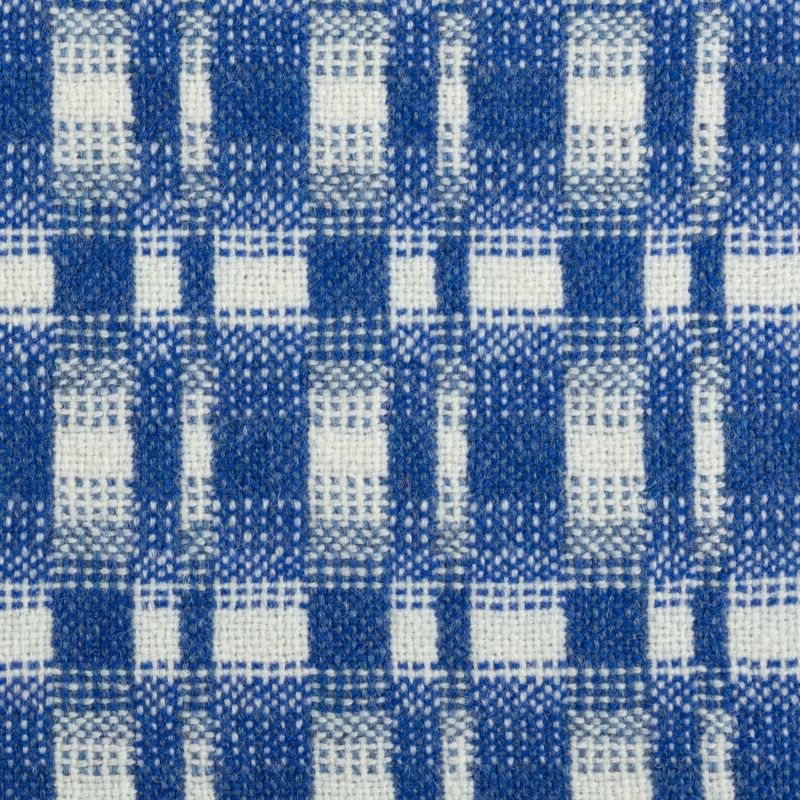
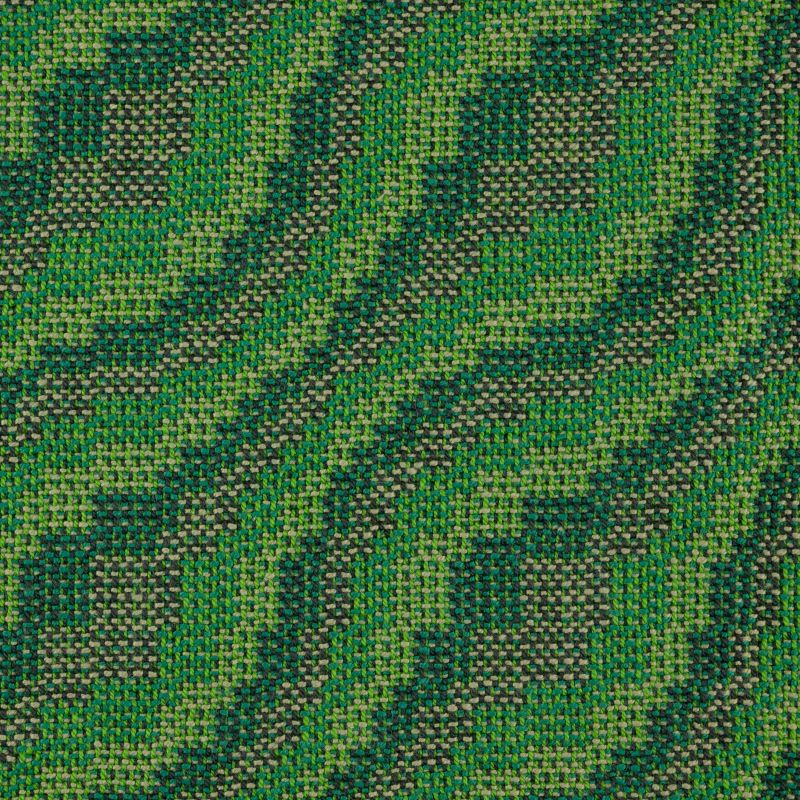
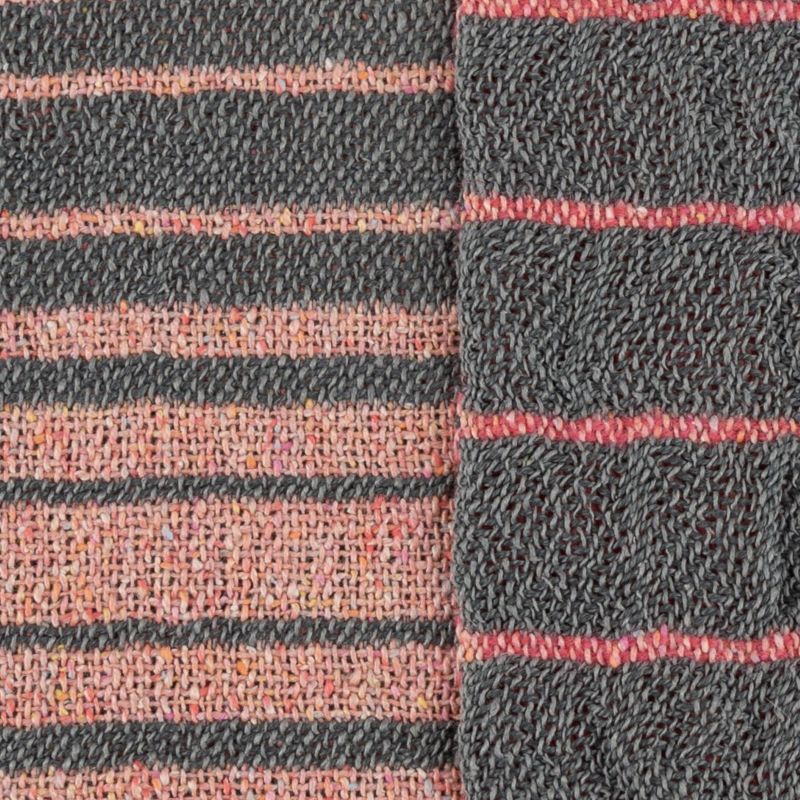
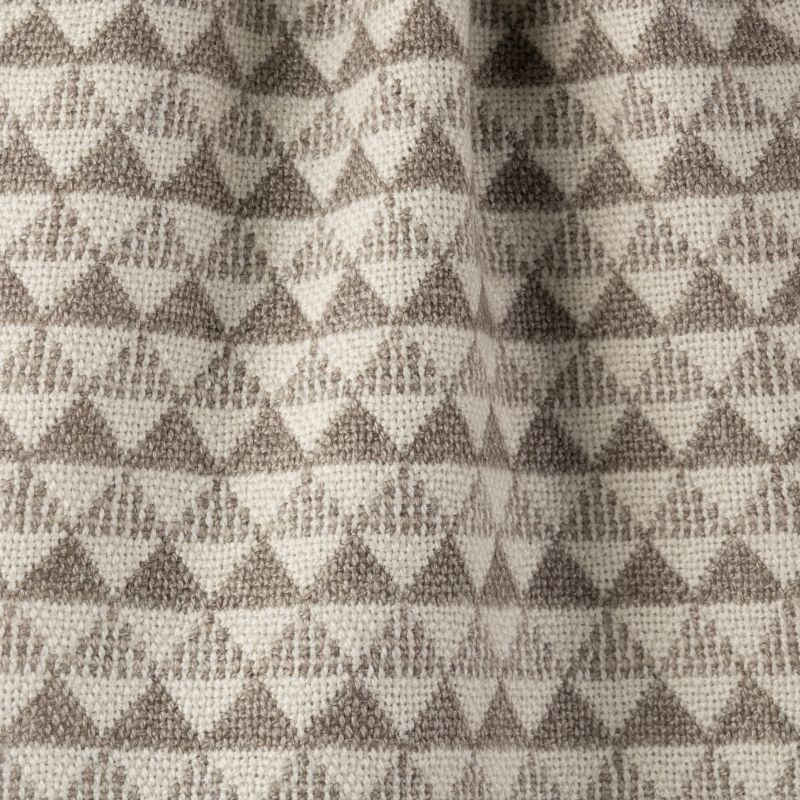
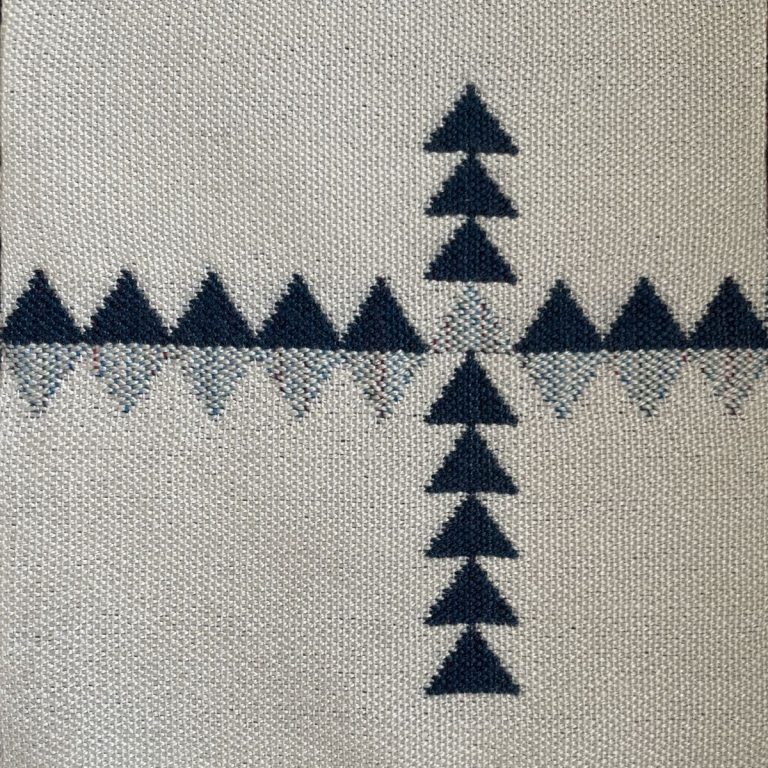
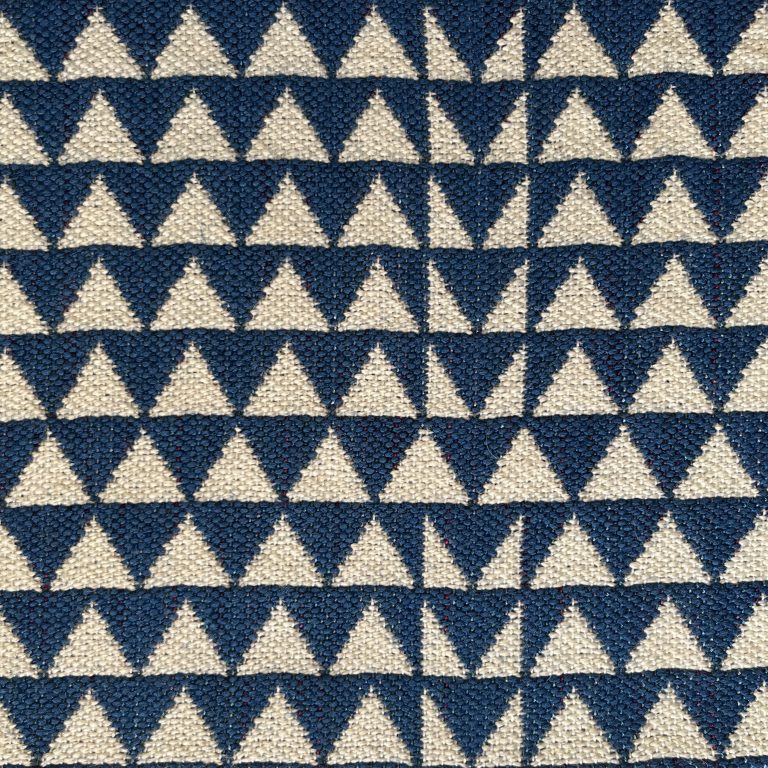
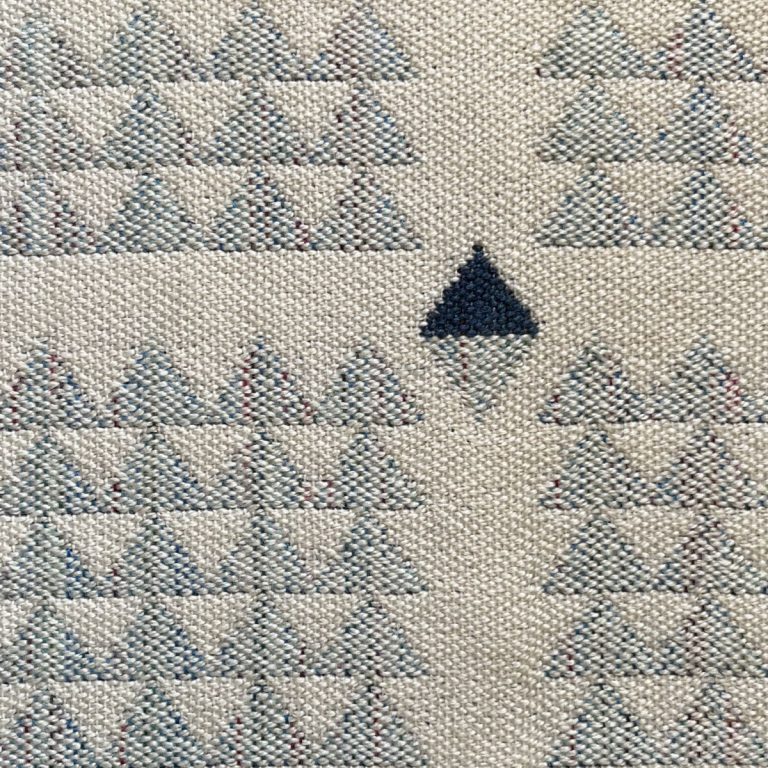
A comment from Bonnie on my previous post has given me a dangerous idea. Bonnie mentions the scale of the fancy twills I referenced and that, of course, is a crucial factor. How often have I had a brilliant scheme which I have scribbled down… and then realised that it will be less than half an inch across? Quite often. So a lot of my drafting effort is expended on finding ways to make things big enough for my liking, because in general I do like things to be quite large scale. However, I also have a soft spot for the very small — that is, the so-small-you-don’t-really-see-it kind of small, where the effect of the ‘pattern’ is more textural than visual. Anyway, in August I will be going for the first time to the AGWSD Summer School, and I will be learning to sew more effectively with my handwoven cloth. So first I will need to weave some cloth that I can sew with. (I do have a vague scheme in mind involving the too-variegated greens and a crepe weave, but that’s as far as I’ve got.) It strikes me that this project is a good candidate for another dose of the anti-idolatry treatment, setting myself the challenge of using a fancy twill at a very small scale. This has “it seemed like a good idea at the time” written all over it, but I have been encouraged to see that my mantra is actually recommended by Daniel Dennett — so that’s all right then.

More immediately, I have been getting to grips with the challenges posed by my first four-colour doubleweave experiment. I started in a modest way, with 1150 ends of linen… That didn’t actually seem like a good idea at the time, but I wanted to do it anyway. In fact, there is only really one problem with it, which is that I haven’t used 16/1 linen before and took a guess at a suitable sett based on info found lying around online. My guess is weavable, but too warp-faced to show all four colours really clearly. The four colours, by the way, are simply

1) warp 1 + weft 1
2) warp 1 + weft 2
3) warp 2 + weft 1
4) warp 2 + weft 2

but because my warp is dominating the cloth, 1 & 2 are very similar as are 3 & 4. I cut off a sample and (following my recent instruction in these arts) mangled it with a rolling pin. (It could probably do with more rolling pin treatment, but the resident pastry chef came after me and reclaimed his kitchenware.) It is nonetheless looking lovely and glossy, but I wasn’t able to get a picture that really shows the shine. Here are the colours, looking ever so subtle… You can make out the red weft in little tiny dots; the other is a very pale gold.

4CDW linen plain weave layers

I wasn’t keen to resley. Given the number of ends, it would have quite a significant impact on the width of the thing, and I could see myself having to wind it all forward and then all the way back again… I thought I should at least weave a few pieces (and make the warp shorter!) before I got stuck into all that.

Then a lightbulb went on and I realised I could use a twill instead of a plain weave. Fortunately I had based my threading on a twilly network, so this morning I re-pegged and started weaving in twill. Much better. The red here is darker than the one above, but the pale gold is the same.

4CDW linen twill layers

I’m still keeping to a very simple networked treadling while I find my way around. The way I am approaching it is with a 32-lag chain for the tie-up, which is the two 16-lag twill tie-ups — one for each layer — interleaved. In order to ‘network it’ I treadle forward for 8 picks, wind back and repeat as many times as I want, then treadle forward for 10 picks to advance.

4CDW twill tie-up

The most important piece of equipment in this arrangement is…

dobby box and kettle

…the kettle! No, it’s the round black knob on the face of the dobby box. That allows me to wind back the chain really easily, although excessive use can lead to blistering thanks to the milled edge. As the knob is on the right hand side of the loom, it is easiest if I have the chain advancing anti-clockwise so that my right wrist is working clockwise, though some designs call for a bit of mix ‘n’ match.

So that’s where we are. More treadlings and colours will follow.

challenges” was posted by Cally on 20 May 2013 at http://callybooker.co.uk

Creative Commons License

Something which interests me is the broad idea of ‘pattern’ in woven cloth. I’ve occasionally had some very surprised reactions to my weaving style, especially when people know that I have a loom with ‘lots of shafts’. My use of this loom seems to suggest to some that I must weave very intricate designs — this kind of thing — but that is not my taste at all. There are always exceptions, of course, but in general I have something of a distaste for the intricate in most artforms. Apart from cornices, which should be as baroque as possible*. My own design instincts run in the opposite direction: how can I use clear, simple shapes to make a compelling design? In fact, how can I make clear, simple shapes at all? Because things which are simple in appearance are not necessarily simple to make.

There are those who love the grid — the verticals and the horizontals which are the basis of weaving — and there are those who seek to break free of it. I’m in both camps, I think. I love to use network drafting to make big sweeping curves. I love to use differential shrinkage to distort the surface of the cloth. I also love block designs. Blocks can be very hungry for shafts and an apparently simple arrangement may be challenging in practice.

I’ve been playing around with climate data from the Met Office to make scarves incorporating bar charts… as one does… and it’s been interesting to think about which structures to use. For these lightweight summer scarves I used huck lace as a background and plain weave to make the pattern. Then I discovered how difficult it is to photograph lace!

highland summer purple

highland summer green 2

Since I like the abstract effect of the different patterns of squares — hope you can see ‘em! — I have started thinking about other structures I can use and what sort of fabrics they will make. Perhaps diversified plain weave for a woollier version, summer & winter for something sturdy and so on. More on this later, no doubt.

There’s one grid pattern, however, which I don’t like at all. Put it down to over-exposure if you like, but tartan really makes me squirm. However, the topic came up at an event I attended a couple of weeks ago, so it has been on my mind. And then, after weaving a couple more high twist scarves, I had a bit of stripy warp left over. This seemed like an ideal opportunity to practice anti-idolatry by making something I don’t like. Of course, I didn’t really weave a tartan. The open sett I was using with the over-twisted wool weft meant that for a ‘normal’ yarn plain weave was a more sensible choice than a twill, and rather than match the warp colours I used random bits of yarn left on bobbins — but I do have 18″ or so of a multi-coloured plaid.

plaid

Oops, that’s the wrong way round. The warp is left-right in that picture. Anyway, it’s good to do things I don’t like from time to time (and I should probably also discipline myself to make a list of intricate things that I do like) but the exercise has also reminded me how little I enjoy changing weft colours.

Currently on the loom: four-colour double weave. At last! And not a grid in sight.

*Update – other areas where I like intricacy are illuminated manuscripts (although I like contemporary work which isn’t as well) and papercuts. I’m sure more will come to me… there’s nothing like a generalisation, even one about myself, to bring out my inner quibbler.

grids, curves, shapes, patterns” was posted by Cally on 19 May 2013 at http://callybooker.co.uk
Creative Commons License

I’m the sort of person who likes to plan things, and also the sort of person who then abandons my plans when something else pops into my head. This recent warp was a whim, but I was quite pleased that I managed to incorporate a ‘previously planned’ element into it — just about the only way my plans ever do get accomplished. (That particular plan was to try using a space-dyed yarn in conjunction with some solid colour silks I had bought to go with it. I only used a tiny bit of the space-dyed yarn, but it totally counts.) I’m very pleased with the result of the whim, which is this silk wrap:

illumination

There are four different blocks of shaded twill changing face at different rates over a repeat of about 3½”, which was the longest I could manage in a dobby chain using these silks! I added the metallic yarn in the same shed as the silk, so it appears and disappears as the face of the twill changes. The aim was to suggest lights on water and for the moment I am calling this piece ‘Illumination’, though I’m not wedded to it. It was fun to make something that (a) is a one-off and (b) wasn’t over-thought before I started. I loved weaving with this silk too: it is a 60/2 nm, but I used two strands per end so that I could mix the colours. I have quite a lot left in shades of gold and salmon, so I think a companion piece may follow.

Last week I was making small steps towards implementing a long-standing plan to weave some scarves for men incorporating reflective yarns — hey, I even bought the reflective yarn! — but another whim got to the loom first. I have recently been blessed with some lovely gifts of yarn from weavers Doni and Kerstin and this has sent me spinning off down other pathways. OK, to be honest, Kerstin’s yarn — linen singles from Sweden — does in fact tie in with a plan I was supposed to be implementing before I decided to promote the reflective scarves up the list… Am I a completely hopeless case? Well, whatever the diagnosis, I am now rolling two plans up into one over-ambitious whim.

Looking back over the last paragraph… Yes, I am a bit chaotic at the moment. I do have an overall plan for the work I want to accomplish this year, but my own plans are not yet well matched to the annual cycle of craft events, deadlines etc that I need to take into account. So there is inevitably a bit of chopping and changing to get samples made, photographs taken etc. Then there is the rest of life jumping up and biting me on the bottom whenever it can. Plus I have to help Polly retrieve her toys…

Polly loses her bead

plans and whims” was posted by Cally on 13 May 2013 at http://callybooker.co.uk

Creative Commons License

If you keep an eye on such things, you”ll probably notice that weaving blogs (and Facebook pages) all over the east of Scotland are suddenly posting pictures of Laura Fry doing this…

Laura Fry in action

…and this…

Laura with the iron

…and, very likely, of Kerstin Fröberg doing this:

Kerstin and the cold mangle

We have been very lucky that Laura — who is over from Canada to visit Kerstin in Sweden — was willing to come all the way to Belinda’s Aberdeenshire studio to teach a workshop on the ‘Magic in the Water’ which is wet finishing. My note taking skills were tested to their limits with the sheer volume of expert information which Laura shared with us, and my brain is still recovering from the assault! I am now looking over my samples with a more critical eye than ever, and will be subjecting them to some ruthless treatment shortly. Laura summarised the three steps of wet finishing as: scour, agitate, compress. On the whole I reckon my scouring processes are pretty good and that I am not bad at finding methods of agitation suitable for my work, but that I can do a lot more on the compression.

Having known both Laura and Kerstin online for some time, it was fabulous — and slightly surreal — to meet them in person. The internet is a bit funny that way! And the workshop also enabled a group of more-or-less local weavers — based within a hundred miles of each other, that is — to meet face to face, many for the first time, so thanks are due to Belinda for making that happen.

It has been a bank holiday here today, and for once we have both had the day off. No work of any kind has been done! We went out for a walk and then to a teashop for tea and scones. Amazing how nice that is.

scour, agitate, compress” was posted by Cally on 6 May 2013 at http://callybooker.co.uk

Creative Commons License

…you look at the last few warp ends you’ve wound and realise that one of them is following its own unique path around the pegs? Or maybe that is just me.

In my defence, it was at the end of a very long day of warp-winding. I was switching colours by using various pegs to anchor the not-in-use-at-this-minute yarns, and I lost the plot somewhere. Then – of course! – I tried to slip the extra warp yarn out of the way, even though it was several ends back in the warp… Well, did I mention it was the end of a long day?

In the end I had to admit defeat and say goodbye to all this:

ex-warp

But now I have this…

lights warp at front

…and this…

lights warp at back

…and I am relieved to report that all the intermediate steps went perfectly according to plan. Then I remembered a potential weft yarn I had forgotten about when I was sampling on my mini-warp, and I tried it, and I liked it a lot, and I may be revising the next part of the plan. I’ll decide tomorrow.

And thank you for all the cushion compliments! I need to make up some more, but I am trifling with thoughts of coordinating buttons instead of getting on with it.

In other random news, the ’5′ on my laptop is not working reliably. I am wondering how I came to wear out the 5 before the other numbers, when you might think the 1 would be first to go. Must be all those 5s in my Swiss bank account number.

you know that moment when…” was posted by Cally on 25 April 2013 at http://callybooker.co.uk

Creative Commons License