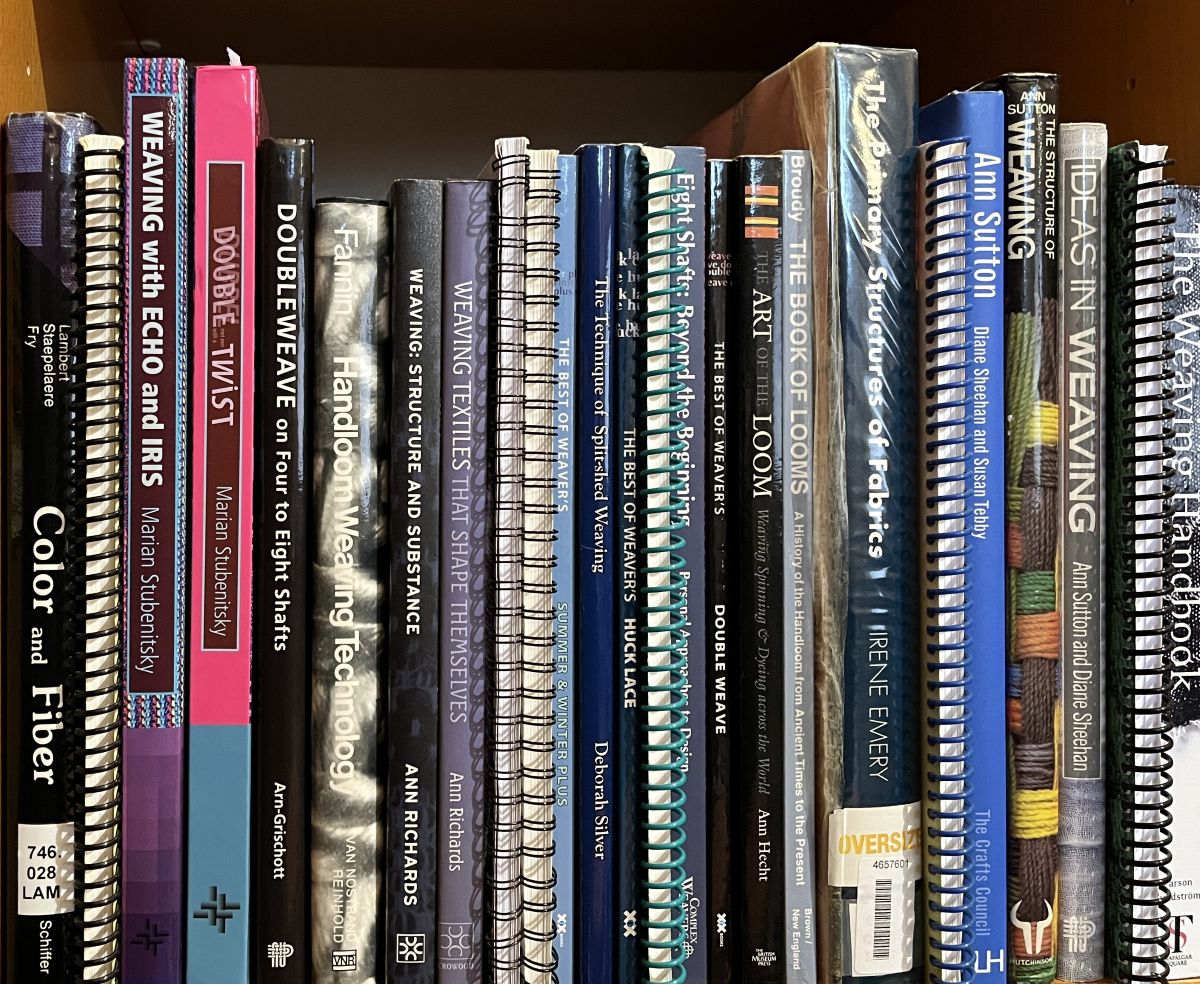
Three influential books
Something I have seen people sharing recently are little grids of The 9 books I’ll never forget, which they have compiled using the myninebooks website. The grids I have seen are all focused on fiction, although that seems to be a personal choice rather than a requirement of the site.
I haven’t compiled a grid, but the project did get me thinking about which books I might select to represent different domains of my life. It’s really hard to whittle it down! But I’ve generously permitted myself to allocate a third of the total allowance to three books which have had a particularly strong impact on my weaving practice.
Here they are.
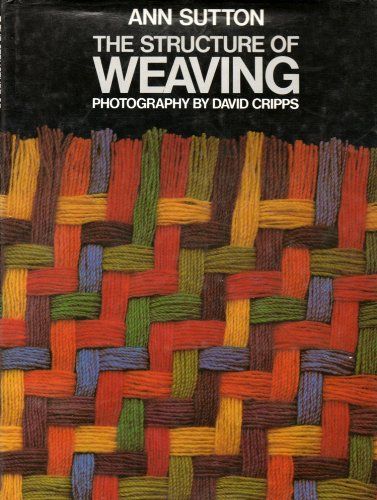
I have to start with Ann Sutton, because The Structure of Weaving was my very first weaving book, when I was just learning to weave on a secondhand four-shaft table loom. It’s a challenging book for a beginner, but there were two things about it that I latched on to.
First, more than half the book is given over to plain weave and twills, woven in a fantastic variety of materials and styles. Second, the pictures. Oh my goodness, the pictures. They are not all in colour, but they are all big and beautiful and packed with detail, and I could just look at them forever.
This book was influential for me, because it showed me right from the start that weaving could do more than I had ever imagined.
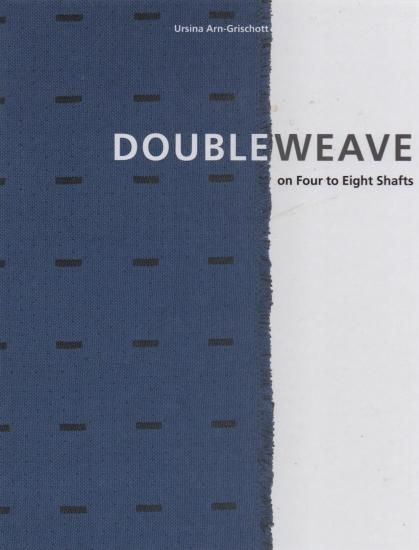
I was very fortunate in my timing as a new weaver, because Ursina Arn-Grischott’s book had not long been published in English and it was still in print when I made my first foray into doubleweave in the early 2000s. And I could not have managed without it, when we were assigned our doubleweave module at Bradford.
For weeks I sat at home with my tiny W30 table loom, working methodically through its pages to learn my way around doubleweave blocks. I can’t think of any other book I have studied so intensely in pursuit of understanding a weave structure.
This book was influential for me, both because it introduced me to doubleweave and because it played such a crucial role in my weaving studies.
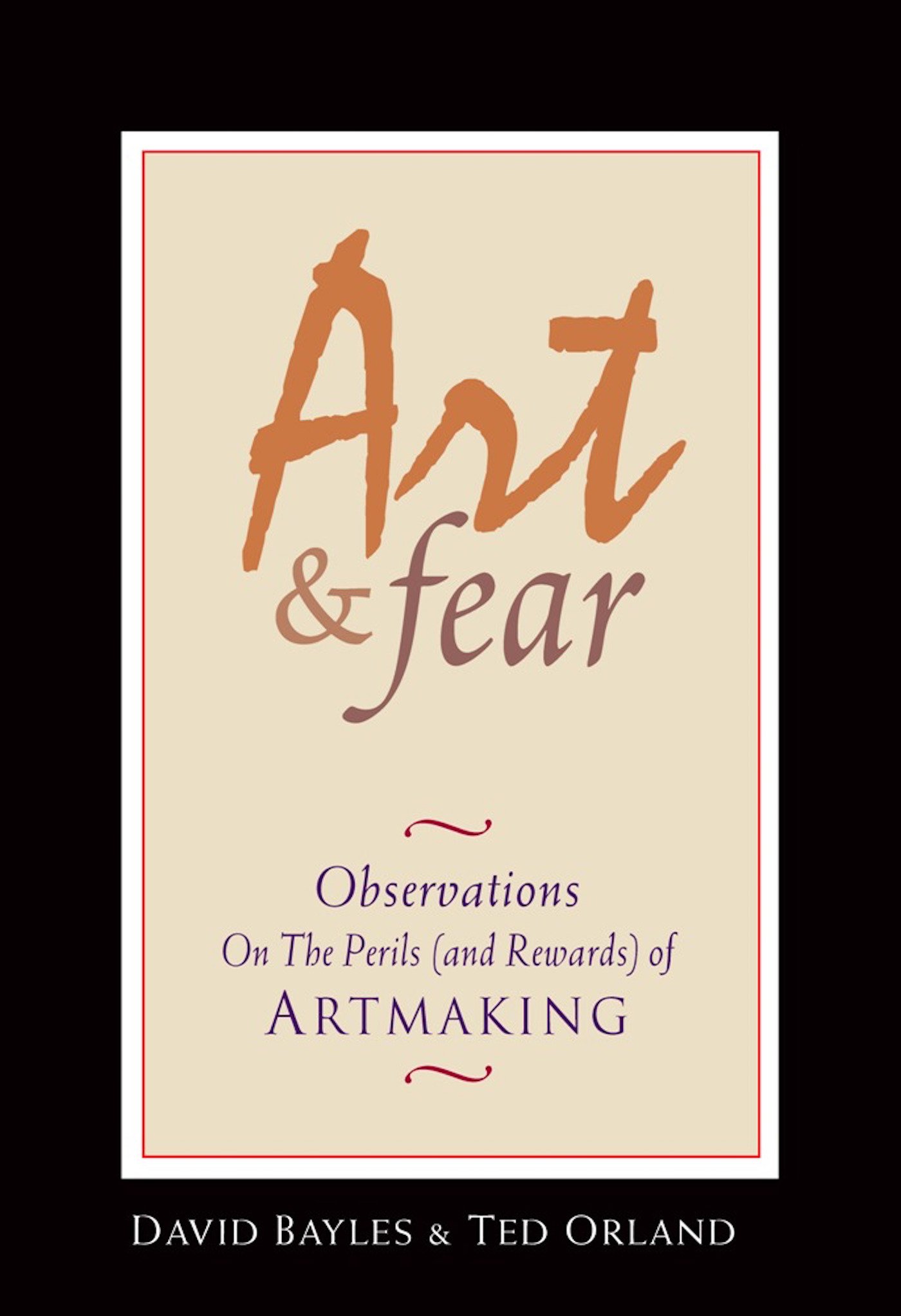
Art & Fear is a completely different kind of book. There are many books on creativity which leave me cold, but David Bayles and Ted Orland eschew the c-word altogether and perhaps that is why it has been an exception. I have it as an audiobook which I listen to in the studio at least once a year. That doesn’t take long as it is a very short book, but it is packed with very grounded, practical observations (to use their own word).
When I gave up a ‘proper job’ to give more time to weaving, I found their low key approach to ‘making ordinary art’ very reassuring. They helped me to feel that I was not alone in either my fears or my resolve.
This book was influential for me, because it encouraged me – and continues to encourage me – to keep making my work.
Three influential books was posted by Cally on 14 October 2026 at https://callybooker.co.uk