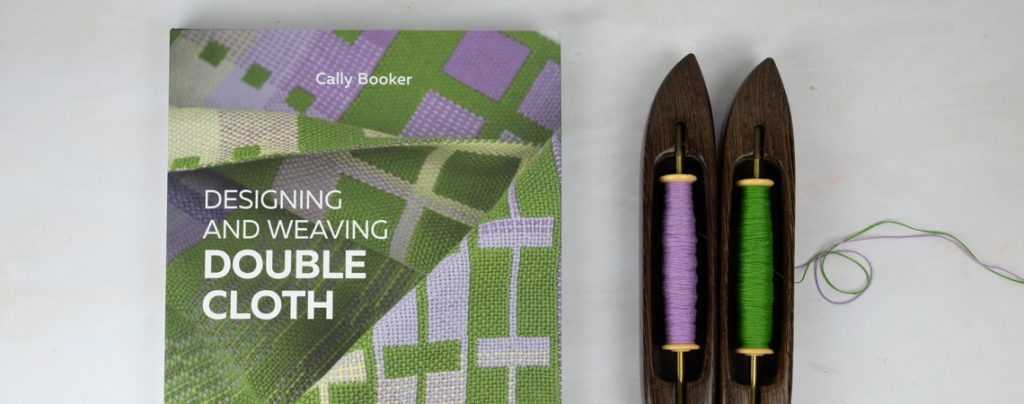
I’ve been thinking about writing a new series of Warp Space posts/emails for subscribers to my Weaving Space website. Of course, it has to be about double cloth: given my book project, I don’t think anyone would be surprised that this is the topic spilling out of me at the moment.
And as I thought about what I might share, I found myself going back over in my mind all sorts of decisions that I had to make in the writing of it, because there is not one right way to ‘do double cloth’ but all sorts of options and possibilities. Options and possibilities are great! But they can also be paralysing, and in order to get to the loom we have to cut through them and whittle them down to “I am going to do this in this way”.
In the book, I have presented different ways of achieving the same thing, and have tried to do this in a way which (i) balances breadth with depth and (ii) offers context for those choices. Take, for instance, the most basic element of a weave structure: how should we thread the loom?
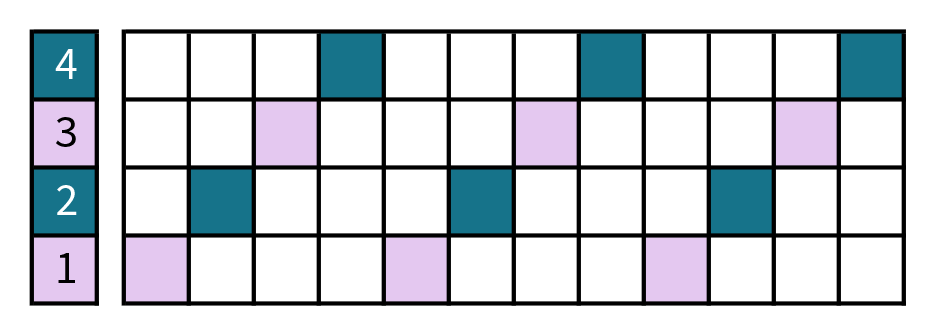
A straight threading for double weave on four shafts
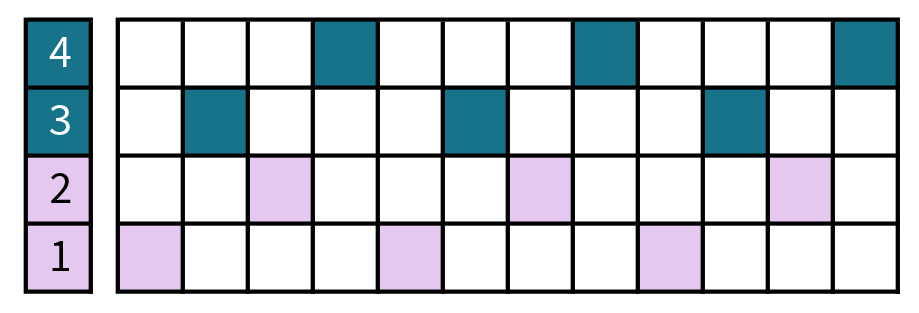
A divided parallel threading for double weave on four shafts
There are many possible ways to thread the loom for a double cloth, but this decision often comes down to a choice between the straight threading and the divided parallel threading shown above. Does it matter which you use? And in what sense might it matter? Does it just affect the process or does it affect the outcome as well? What are the circumstances that might me lead me to one choice or the other?
These are all questions I have attempted to address within the book, but they are also questions where I have a lot more thoughts than would fit within its pages! So I thought it might be fun to lift the lid on a few decisions: both the decisions we might make as weavers, and the decisions I made as a writer when highlighting those weaving decisions.
Does that sound like over-thinking to you? Welcome to the tangled world inside my head!
Finding a focus
I plan to address the thorny threading question as part of the series, but as I began to write I found myself reflecting on the book as a whole. This is a little bit self-indulgent of me, because it doesn’t concern the practicalities of weaving, so I felt these ruminations might be better posted on my personal blog where self-indulgent rumination has a well-established home!
There’s so much that goes into a woven piece. Obviously, there is the yarn and the weave structure; there are the techniques and processes we use both on and off the loom; there is the detail of the draft; the sett and the sleying pattern. Stepping back a bit, there is the inspiration for the piece, which will lead us to certain colour and fibre choices; and there is the context for the piece, its role and function, both within our own creative practice and in the wider world. This might include our level of experience, our personal style, whether the piece is intended to have a specific function and what that function is… I could go on and on.
Having undertaken to write a book about double cloth, I had only narrowed down one of these elements – the weave structure – and that not by much! So how to take all this and make it manageable within the confines of a book? I made a couple of key decisions, based purely on my own interests and preferences.
There are two main reasons, it seems to me, why double cloth is so magical. One is that it gives us the ability to create three dimensional structures in a single piece. The other is that it allows us to see two distinctly different layers of cloth side by side. I decided to make the second reason my main focus. I have included some drafts and examples for three dimensional structures as well – I could hardly talk about double cloth without going some way down this path – but my focus is on the ways in which we can manage the exchange of layers in order to make patterns. Because I am a greedy weaver. I want a lot from my loom, and the thing I am most greedy for is pattern.
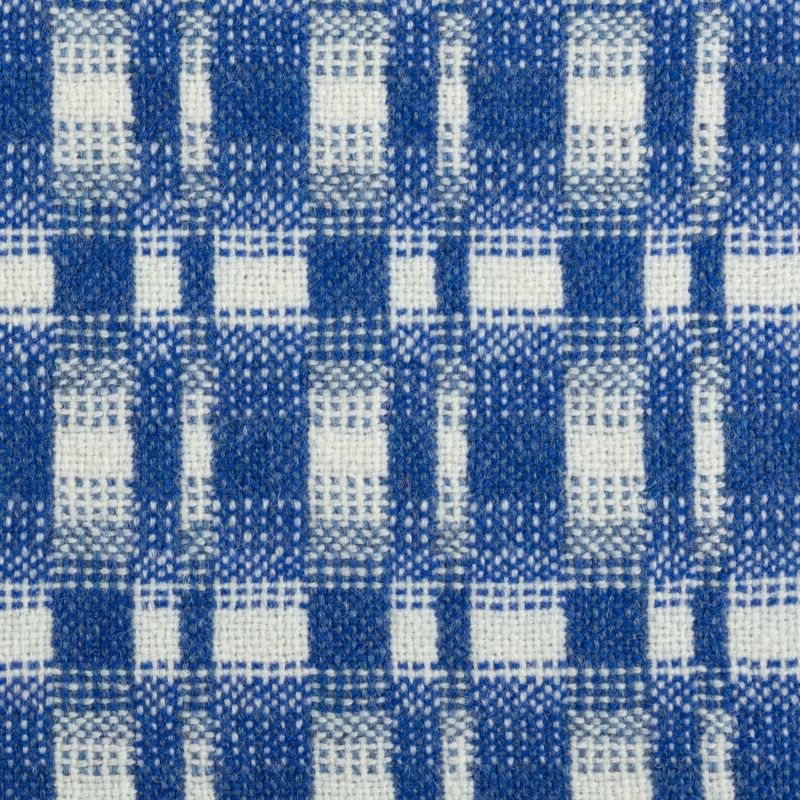
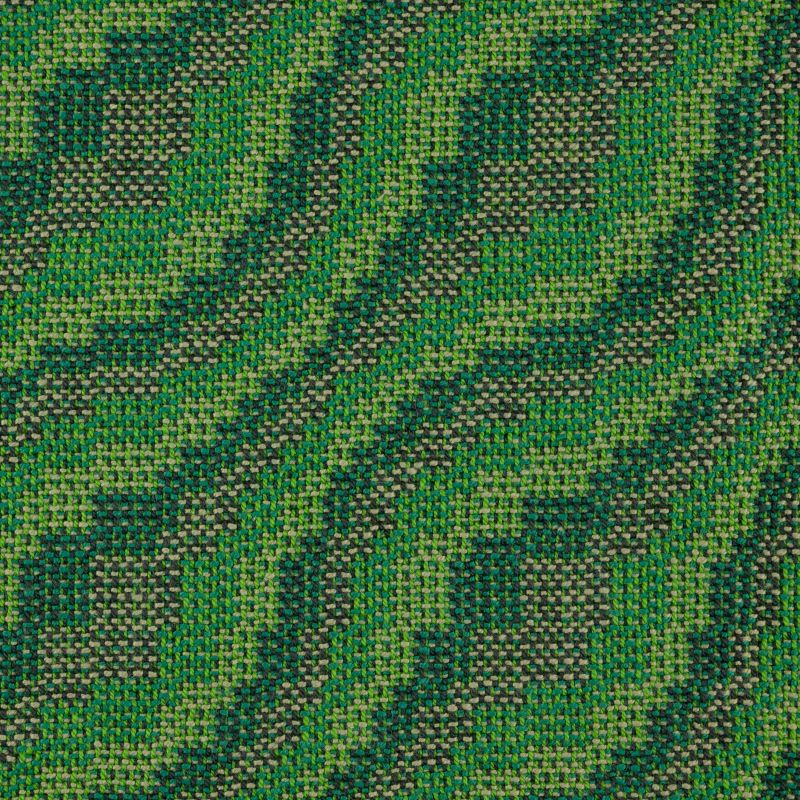
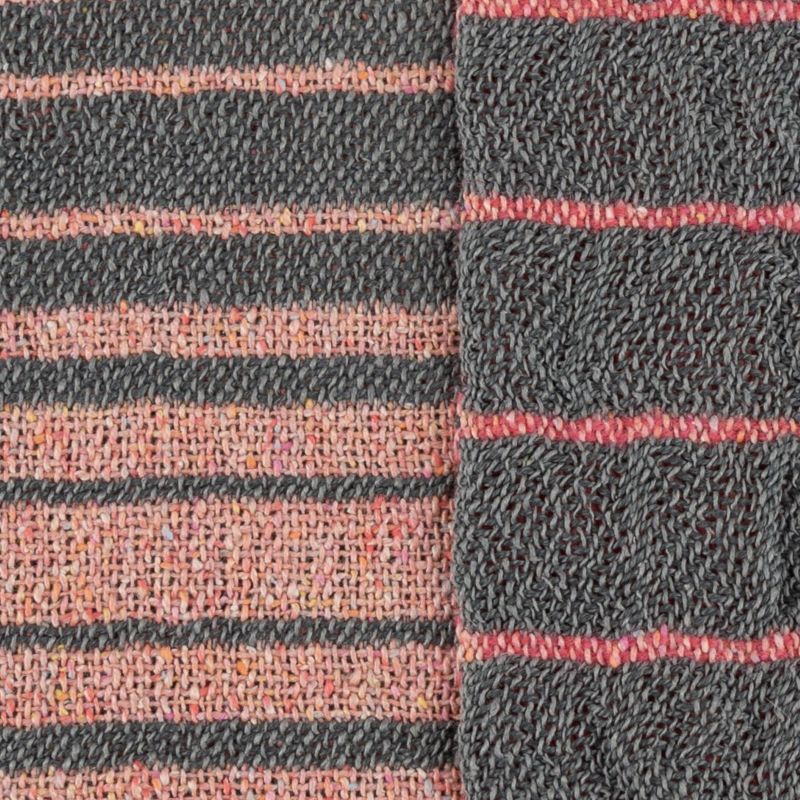
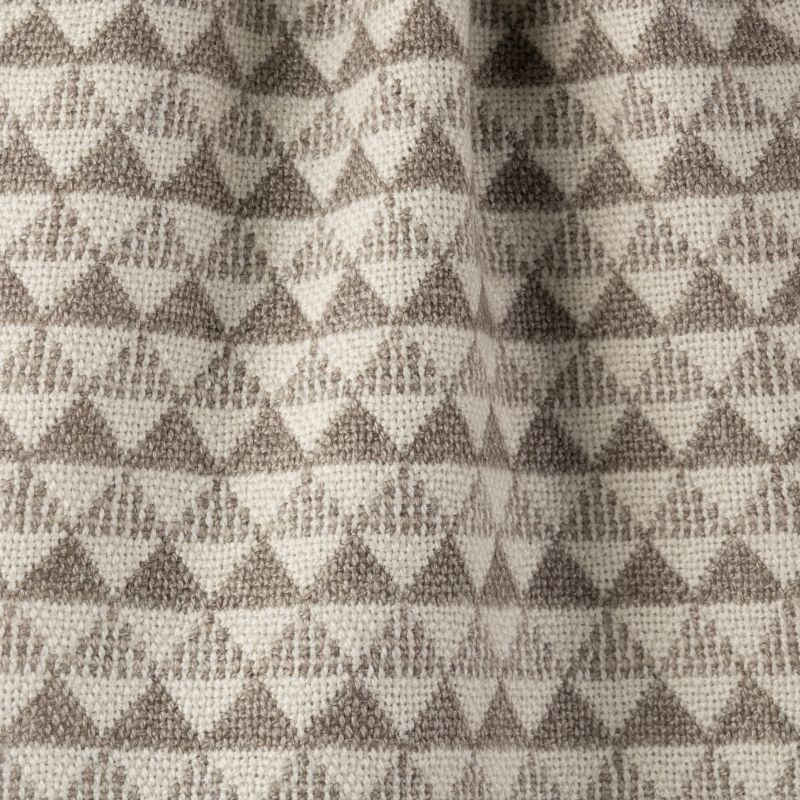
And once I had decided that pattern would be my focus, I knew exactly how I wanted to organise the book: in chapters themed around different elements of double cloth pattern-making. It’s an aspect of design that sits somewhere between the vision we have for the piece and the detail of the weave structure, and I decided I wanted to sit in the middle and try to draw those two things together. I wanted to offer each element as a broadening of our double cloth repertoire, and to build up a set of tools we can use to put these elements to work.
A word about projects
I mentioned the project in chapter five. This book does have projects in it, but it is not intended to be a project book. This was in fact the first decision I made, before I even signed the contract. I explained to my publisher that I wanted to write a book of principles and processes, and that if they wanted a book of projects then I was the wrong person. But I did want to show those principles and processes in action and the projects I have included are intended to do that. Here’s a design based on diagonals: this is what inspired me, and this is how I’ve expressed that inspiration in weave.
And it was fun! I pretty much suspected that I would not absolutely love the process of writing a book, but what’s not to love about designing and weaving projects? Isn’t that why we’re here??
That’s enough of my self-indulgence! Or is it? If you are interested in my behind-the-scenes ruminations on what projects to make and include, let me know.
Double Cloth Decisions was posted by Cally on 4 May 2026 at https://callybooker.co.uk